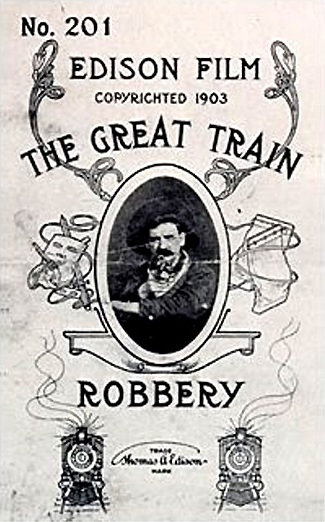
Long before the era of high-speed chases and gripping detective narratives, there was “The Great Train Robbery” – a pioneering cinematic masterpiece that marked the birth of crime drama in the world of cinema. In this blog post, we will journey back to the early 20th century to uncover the plot, inspiration, notable production trivia, and the creative minds that brought this groundbreaking film to life.
“The Great Train Robbery” Plot:
Released in 1903, “The Great Train Robbery” directed by Edwin S. Porter was a cinematic revelation. The film tells the story of a group of outlaws who meticulously plan and execute a daring train heist. After successfully robbing the passengers and the train’s safe, the gang faces a dramatic showdown with a posse of lawmen, resulting in a thrilling shootout.
Inspiration:
The inspiration for “The Great Train Robbery” was drawn from real-life criminal events of the time. The film’s narrative was inspired by a series of train robberies that had captured the public’s imagination, notably the Union Pacific No. 9 train robbery of 1900. This real-life crime served as the backdrop for the fictionalized tale, giving audiences a taste of the Wild West’s allure.
Notable Production Trivia:
- Location Shooting: Filmed on location in various parts of New Jersey, including the Edison Manufacturing Company’s Black Maria studio, the film showcased realistic landscapes, adding to its authenticity and appeal.
- Innovative Techniques: Edwin S. Porter employed innovative techniques that were groundbreaking for the era. The use of cross-cutting to depict simultaneous action and the famous scene of a bandit firing his pistol directly into the camera left audiences in awe.
- Minimal Cast: With a limited cast of actors, “The Great Train Robbery” introduced audiences to distinct characters, a critical element in the development of crime drama. Notably, Gilbert M. ‘Broncho Billy’ Anderson played multiple roles, showcasing his versatility as an actor.
Actors:
The film’s ensemble cast included some notable early cinema performers, with Broncho Billy Anderson being the standout. Anderson’s portrayal of one of the train robbers helped solidify his status as an early film icon. The cast, though small in number, played a pivotal role in defining the characters of crime drama.
Director:
Edwin S. Porter, a visionary filmmaker of his time, directed “The Great Train Robbery.” His innovative storytelling techniques and pioneering use of special effects contributed significantly to the film’s success. Porter’s work in this film would influence generations of filmmakers.
Producers:
“The Great Train Robbery” was produced by the Edison Manufacturing Company, led by the iconic inventor Thomas Edison himself. Edison’s involvement in the production further highlighted the film’s significance in the early days of cinema.
“The Great Train Robbery” stands as a testament to the creativity and innovation of early filmmakers. While it may appear simplistic by today’s standards, this 1903 crime drama was a trailblazing work that laid the foundation for the countless crime dramas that would follow. Edwin S. Porter, Broncho Billy Anderson, and the Edison Manufacturing Company deserve recognition for their contributions to the crime drama genre, shaping it into the gripping, suspenseful narratives we continue to enjoy today. As we celebrate the evolution of crime drama in cinema, we must always pay homage to this groundbreaking classic that started it all.



 Murder Mystery Events